Kyoto's Hidden Wooden Pavilions: Aesthetics of Wabi and Cedar
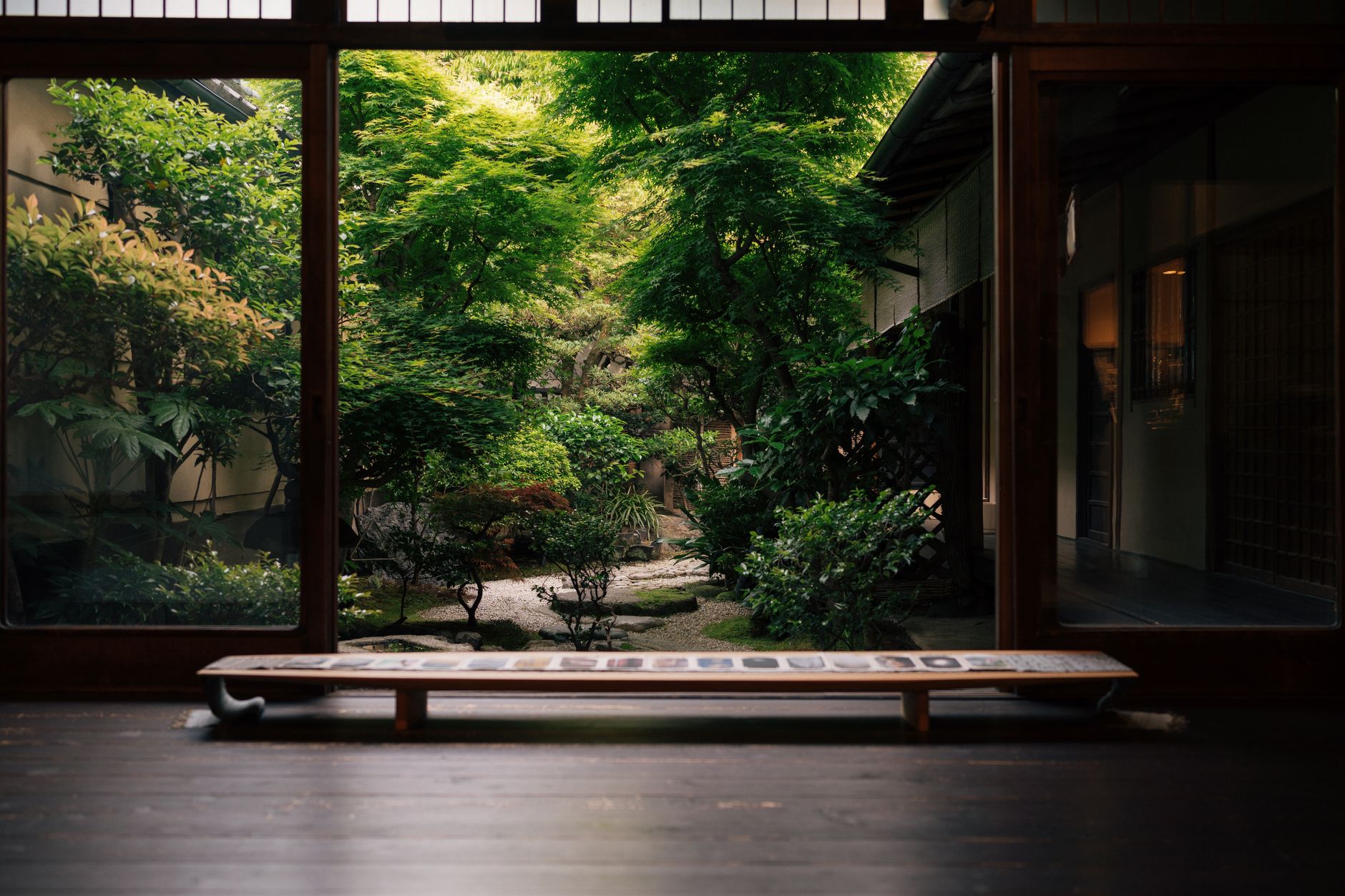
Beyond the tourist corridors of Gion and the crowded approaches to Fushimi Inari, Kyoto preserves an unbroken lineage of joinery and acoustic privacy. In small alleyways paved with river stones, high timber gates open into worlds that seem insulated against the passage of modern centuries.
I. The Soul of the Machiya Townhouse
Traditional Kyoto urban dwellings—machiya—were constructed without steel nails. Using interlocking mortise-and-tenon joints, master carpenters joined seasoned cypress and cedar frames designed to flex gently during tremors. The facade presents delicate lattice screens (koshi) that allow occupants to look outside while preserving interior seclusion.
Within, the sequence of tatami rooms leads inexorably toward a tiny courtyard garden (tsuboniwa), where a single moss-covered stone lantern and a bamboo water spout create a private cosmos within five square meters.
II. The Mathematics of the Four-and-a-Half Mat
The classical tea pavilion (chashitsu) standardized by Sen no Rikyu was designed to eliminate social hierarchy. The crawl-in entrance (nijiriguchi) forced samurai to remove their swords and stoop low, entering as equals into an unornamented space constructed from earth plaster, soot-darkened bamboo, and rush flooring.
"In Japanese aesthetics, perfection is sterile. Beauty emerges through the patina of hands upon unvarnished wood and the slow weathering of clay."
III. Raked Gravel as Liquid Surface
Karesansui—dry landscape gardens—are not decorative; they are intellectual devices. The white crushed granite (shirakawa) is raked at dawn into waves representing oceanic tides or flowing rivers, reminding the observer of impermanence and cyclical regeneration.
IV. Etiquette for Mindful Visitors
When entering private residential temples, always remove footwear at the genkan, step directly onto the polished wooden sill without touching your socks to the stone ground, and turn off shutter sounds on cameras. Speak in whispered tones to honor resident monks and meditators.
Craft Your Japanese Pilgrimage
Connect with 111111 for private tea ceremony invitations and stays in historic, restored Kyoto townhouses.
Inquire About Asian Itineraries